Antimicrobial resistance (AMR): The unseen emergency threatening to change medicine as we know it. Picture a world in which a simple scratch, a routine operation, or even a common infection like pneumonia could be the last thing you ever do. It is the stuff of science fiction, but it is also the grim future that antimicrobial resistance (AMR) is quietly creating now.
What is AMR?
Antimicrobial Resistance (AMR) happens when microorganisms, such as bacteria, viruses, fungi and parasites, change and no longer respond to the treatments that are supposed to kill them. It's like germs learning to push back. When antibiotics or other antimicrobials are applied, most of the germs that are vulnerable are killed. But a few hardy ones can live, reproduce and pass on their resistant characteristics. Eventually these 'superbugs' will make our strongest medications useless.
Antibiotics are not just targeting the diseases they're designed to treat, they're also interfering with beneficial microbial ecosystems in our guts and the environment. A single round of antibiotics can drastically cut down the diversity of gut bacteria, and some species may take months to recover, if they recover at all. Antibiotic residues that enter soil and waterways through agricultural runoff or wastewater disrupt the microbial communities that cycle nutrients and clean water. This creates an environment where resistant bacteria can thrive and exchange resistance genes.
Why You Should Care
1. It's Already Killing Millions Of People
AMR is not a future problem. It's a current problem. In 2021, 1.14 million fatalities globally were directly caused by AMR alone. It caused 1.27 million direct fatalities in 2019 and contributed to roughly 5 million more. That's more than a million households lost every single year.
2. The future is even worse
If we don't act, the numbers get terrifying. New projections show that 39 million deaths directly linked to bacterial AMR will occur between 2025 and 2050 – that's three deaths per minute. By 2050 we could be losing 10 million lives a year to illnesses that were once easily treated.
3. Modern medicine is dangerous
If antibiotics do not work, simple medical procedures become very risky. We assume we can get appendixes removed, hips replaced, caesareans performed, teeth fixed and chemotherapy administered – but these could become life-threatening gambles with untreatable illnesses. This is a historic setback that puts at risk the very successes of modern medicine.
4. The Economic Impact Is Enormous
AMR could cut global GDP by $3.4 trillion a year by 2030. Over the next decade, 24 to 28 million more people could be pushed into extreme poverty due to productivity losses, increased healthcare expenditures and rising destitution.
5. It's Affecting Everyone, Everywhere
AMR doesn't discriminate, it affects people regardless of their economic situation or age. But not all people are impacted the same way. Poverty, inadequate sanitation and hygiene are drivers of AMR and low and lower-middle income nations are disproportionately affected.
6. It's a 'One Health' crisis
AMR isn't only a human health problem. It is in agriculture, food manufacturing and the environment. The over-use of antibiotics in animals and the disposal of pharmaceutical waste in soil and water spreads resistant microbes. Resistant microorganisms do not respect borders between human, animal and environmental health – To combat AMR, a "One Health" strategy is required that recognises these links.
What are you able to do?
The good news is, we all have a part to play in keeping antibiotics effective. Here are three simple, yet effective things you can do:
- Don't take antibiotics for colds and flu — they won't work because these illnesses are caused by viruses, not bacteria.
- Never reserve antibiotics for later use — they won't work correctly and may even make the situation worse.
- If you are given antibiotics, take the full course exactly as your GP, nurse or chemist has told you to. This will help them work properly.
As a rule, patients should not self-medicate, follow therapy and not break the cycles of medicamentation. Doctors need to be judicious in prescribing antibiotics and they need to follow guidelines.
Conclusion
Antimicrobial resistance is an invisible hazard but its victims are not. It undermines human and animal health, food security, economic development and social equality. World leaders have realised the importance, agreeing to a UN political declaration in September 2024 with aggressive targets to cut AMR deaths by 10% by 2030. But governments and healthcare institutions cannot fix this on their own.
When you take antibiotics carefully, you help save these wonder treatments for yourself, your loved ones and future generations. Now is the moment to act.
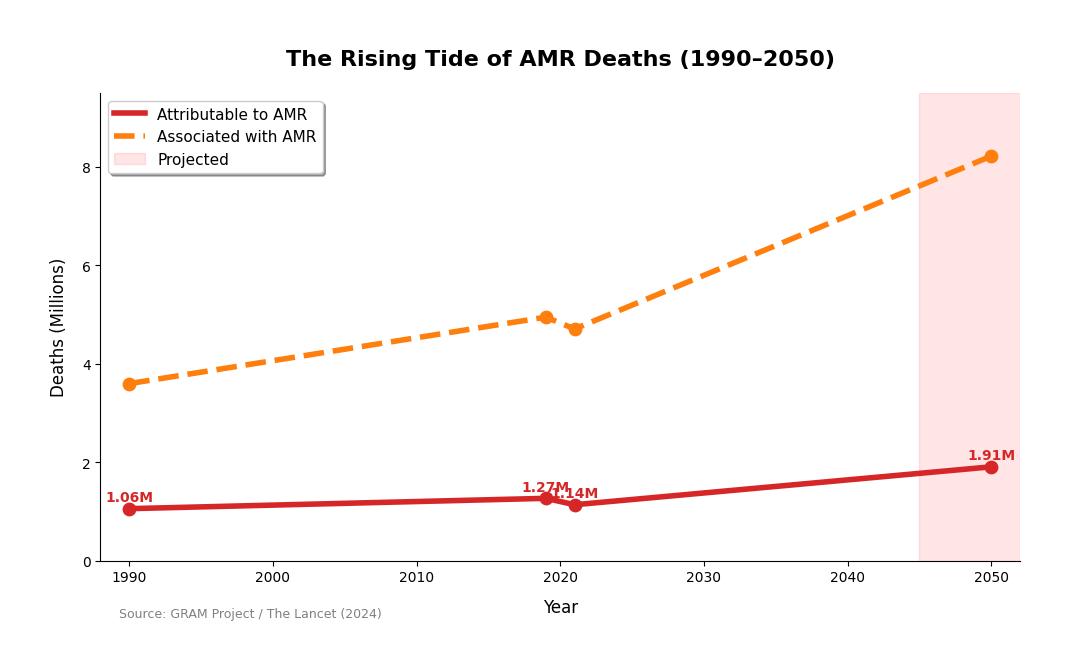
Figure 1 Analysis: The figure above shows a large increase in global deaths from AMR between 1990 and 2050. We expect deaths due to AMR to increase from around 1.06 million in 1990 to 1.91 million in 2050. Meanwhile, deaths attributable to AMR are rising faster, from over 4 million in 1990 to over 8 million by 2050. The projected term indicates a continuing positive trend and implies that the burden of AMR will increase substantially over the next few decades.
These data point to AMR as an emerging threat to public health worldwide. The sharper rise in deaths associated with AMR vs the directly related deaths shows that resistance will be an increasingly important factor in mortality for a broad spectrum of diseases and health problems. If current trends continue, AMR might place a heavy burden on healthcare systems, increase the number of ineffective treatments and reduce the impact of current antibiotics. The projections underscore the urgent need for better antimicrobial stewardship, infection prevention strategies, surveillance systems and the development of new antimicrobial drugs to prevent future death.