📅 2 July 2026🏷️ Alzheimer's Genetics⏱️ 6 min read👩🔬 Linda Osaghale
The Hidden World of Gene Regulation
Your DNA is packed into your cells like a massive library. But not all books are accessible at all times. Some are open and ready to read. Others are closed and inaccessible.
That's chromatin state. And it matters for Alzheimer's disease.
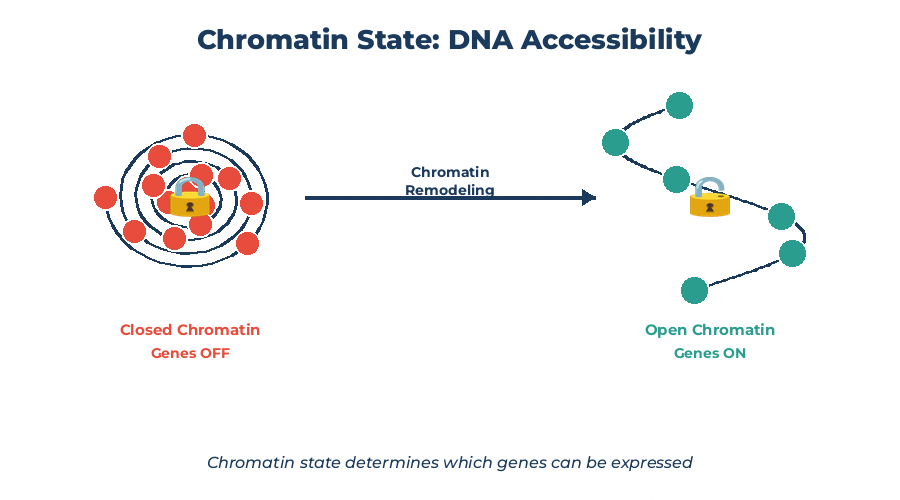
Figure 1: Chromatin state determines which genes can be expressed. Alzheimer's risk variants are found in active chromatin regions, suggesting regulatory function. Based on Osaghale et al. (2026).
What Is Chromatin?
Component
What It Does
DNA
Contains genetic information
Histones
Proteins that DNA wraps around
Chromatin
DNA + histones
Chromatin is the structure of your DNA in your cells.
What Is Chromatin State?
Chromatin state refers to the accessibility and activity of DNA regions:
State
What It Means
Promoter
Where transcription starts
Enhancer
Boosts transcription
Transcribed
Actively being transcribed
Repressed
Transcription is blocked
Quiescent
Inactive regions
Chromatin state determines which genes can be expressed.
Why Chromatin State Matters
1. Gene Expression
Observation
Implication
Open chromatin
Genes can be expressed
Closed chromatin
Genes are silenced
State changes
Gene expression changes
2. Tissue Specificity
Observation
Implication
Different states
Different tissues have different chromatin states
Brain-specific
Some states are brain-specific
Cell-specific
Different cell types have different states
3. Disease Relevance
Observation
Implication
Altered states
Chromatin state changes in disease
Risk variants
Variants may affect chromatin state
Therapeutic targets
Chromatin-modifying drugs could help
How We Assessed Chromatin State
Data Used
Data
What It Provided
Chromatin state segmentation
Functional categories
Multiple cell types
H1-hESC, IMR90, others
Brain tissues
Where available
Our Approach
Step
What We Did
1
Identified lead variants
2
Extracted chromatin state data
3
Determined which states variants were in
4
Interpreted functional relevance
What We Found
Variants in Active Regions
Finding
Detail
Active chromatin
Many variants in active regulatory regions
Tissue specificity
Some variants in brain-specific states
Regulatory regions
Enhancers and promoters implicated
Implications
Implication
Detail
Regulatory function
Variants may affect gene expression
Brain relevance
Some variants affect brain-specific regulation
Mechanism
Variants may work through chromatin changes
Why This Matters
1. Regulatory Variants
Observation
Implication
Variants in regulatory regions
May affect gene expression
Active chromatin
Variants in active regions are more likely to be functional
Tissue specificity
Effects may be brain-specific
2. Therapeutic Opportunities
Opportunity
How It Could Work
Chromatin-modifying drugs
Affect gene expression
Epigenetic therapies
Target chromatin state
Precision medicine
Personalized approaches
3. Research Implications
Implication
Detail
Need for tissue-specific studies
Chromatin state varies by tissue
Need for multi-omics
Integrate genetics and epigenetics
Need for functional studies
Validate regulatory effects
The Bottom Line
Chromatin state determines which genes can be expressed
Alzheimer's variants are in active chromatin regions—suggesting regulatory function
Tissue specificity matters—effects may be brain-specific
Chromatin-modifying therapies could target Alzheimer's
More research is needed to understand chromatin effects
Chromatin state is a key factor in Alzheimer's gene regulation.